CONTACT
P.O. Box XXX
Farmington, Maine, USA XXXXX
peasant.paintings@yahoo.com
Chinese Peasant Art from Jinshan and Huxian
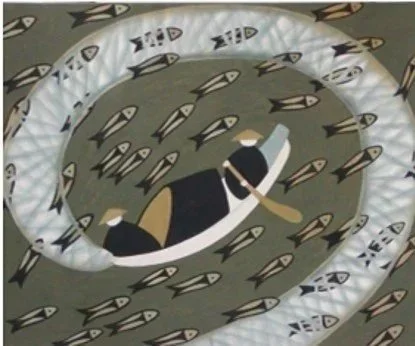
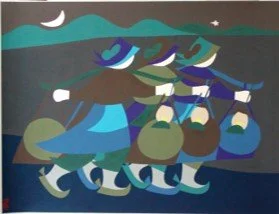
Many so-called “Chinese peasant artists” have achieved considerable attention not only in China but also around the world. Ann Arbor and John Rosenwald first encountered examples of this work in the fall of 1987 during their first time teaching at Fudan University in Shanghai, when they saw some striking depictions of carpentry tools in a small shop. Their first extensive exploration of the tradition came in 1997, near the end of a year teaching on a Fulbright grant. In 2002, they traveled with a neighbor from just outside their Hangzhou University residence hall to the Jinshan region of Shanghai municipality, where they not only purchased some paintings but also had an opportunity to meet a number of the artists. Later that year they by chance discovered two peasant art shops in Xi’an, one of them owned and managed by Ding Jitang, who had essentially initiated the peasant painting movement half a century earlier by offering to instruct farmers and workers in rural Hu County.
One excursion led to another. Over the next fifteen years, while regularly teaching and offering lectures at major universities, they assiduously began to visit the Jinshan area and Xi’an, talking with the artists, discussing their experiences, collecting paintings and woodblock prints, photographing the environment and the artists themselves, and attempting to understand both the processes of making such work and the relationships between the art, the artists, and their communities.
Perhaps because of the intensity and frequency of their attention, the artists responded with remarkable grace and generosity. Jinshan artists took them into their homes, demonstrated their techniques, offered them early drafts of work that had become well known. Ding Jitang escorted them through Shaanxi Province, introducing them to many of his students and many other artists that his own students had taught. He eventually gave them the first prints of half his life’s work and one of his actual woodblocks.
Meanwhile Ann and John had begun to share their love of what they had fortuitously encountered. A small local show arranged by the manager of the University of Maine Farmington Art Gallery led to a massive exhibition (more than seventy pieces) staged at the Maine State House, the governor’s residence, and the offices of the Maine Arts Commission. A year later, in conjunction with a semester-long celebration of Asian art and culture, they staged another major show at Beloit College in Wisconsin, where John taught for more than thirty years.
After twenty years of engagement with Chinese peasant art, they possess around five hundred pieces, mostly from the Jinshan and Huxian movements. In 2021 they created a show of the work at the Harlow Gallery in Hallowell, Maine, one of the best small galleries in the state. This opportunity came at a time when Ann and John were getting older and beginning to downsize, as they began looking for potential locations to place their collection so that in the future many others can experience the same pleasure that they have enjoyed for the past three decades.
Farmington, Maine, 2025