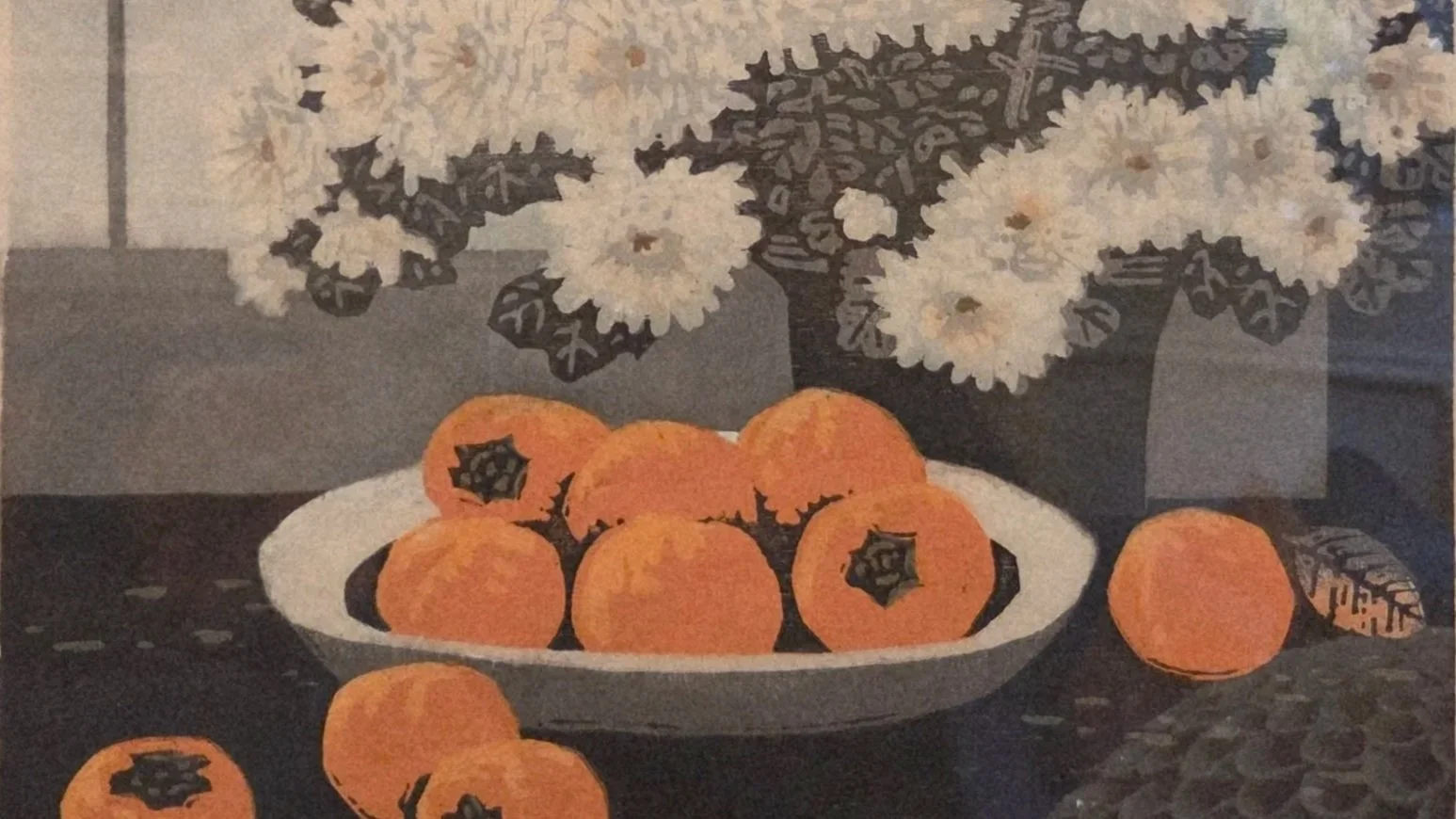
This brief introduction presents paintings and woodcuts from the two most important schools of Chinese peasant artists, Jinshan near Shanghai and Huxian outside Xi’an.
The Huxian school developed in the mid-1950’s with the support of Mr. Ding Jitang, who traveled to a rural region near Xi’an and encouraged peasants to expand their craft tradition (embroidery, papercuts, batik) by exploring painting as an artistic medium. Although he encouraged their painting, Ding personally worked mostly as a woodcut artist, influencing a number of students to explore that medium as well. The success of this school led to many followers, most notably those in Jinshan, where Mr. Wu Tongzhang helped create the Jinshan Peasant Painting Academy during the early years of the Cultural Revolution (1966-76).
Some peasant painters remained mere amateurs, sometimes aspiring only to find acceptance as propaganda artists. However, at their best, they used craft traditions to create paintings and woodcuts remarkable for their design, color, and documentary power. Within very few years, the peasant painters had attracted attention not only in China, but also around the world, with significant exhibitions in Europe and Japan by the mid-1980s.